ASUS ROG Swift OLED PG32UCDM Review and Buying Guide
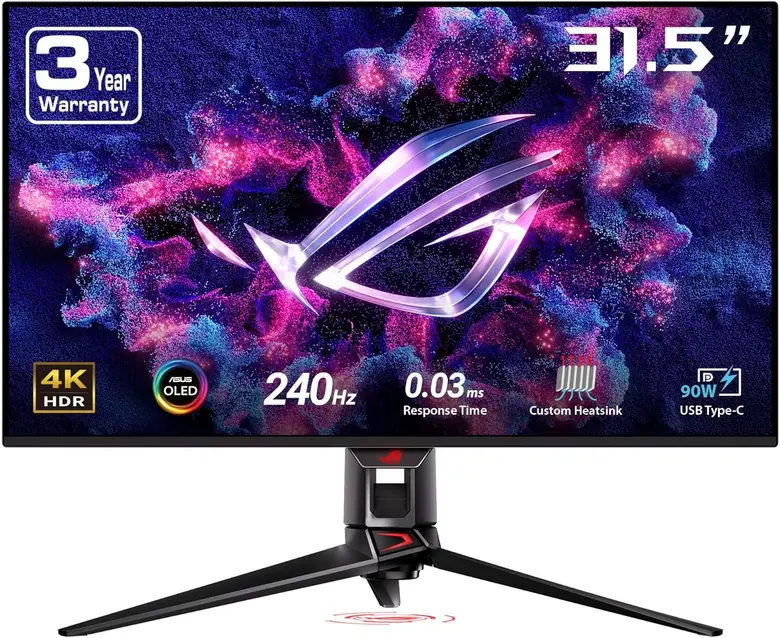
The ASUS ROG Swift OLED PG32UCDM is best understood as a monitor built around a specific balance of panel technology, resolution, speed, desk usability, and regional value. Instead of treating every display as if it serves the same buyer, this guide reads the actual stored specifications for this model and turns them into a practical buying recommendation. The current data points show 32 inch, 3840 x 2160 (4K UHD) resolution, QD-OLED panel technology, and 240Hz refresh rate. That combination tells us where the monitor is naturally strong, where it may need a closer look, and which buyer should shortlist it.
For most people, the first question is not whether the monitor is technically impressive. The real question is whether it matches the work or entertainment setup they are building. A high-refresh gaming desk, a creator workstation, a USB-C laptop dock, and an office productivity station all stress different parts of the spec sheet. On this model, the automatic purpose analysis currently rates gaming at 9.6/10, esports at 9.0/10, creator work at 9.2/10, office productivity at 8.4/10, movies and HDR at 9.4/10, and overall value at 8.2/10. Those scores are built from refresh rate, response time, resolution, panel type, brightness, USB-C support, and feature completeness.
Display Quality and Everyday Clarity
The display experience starts with resolution and panel type. A 3840 x 2160 (4K UHD) screen changes how much workspace you get, how sharp text appears, and how hard your graphics card has to work in games. Because this model is listed as 4K-class, it should be particularly appealing for users who care about text clarity, dense spreadsheets, timeline editing, and high-resolution media. 4K also makes a 27-inch or 32-inch screen feel more premium because UI edges, small fonts, and image previews appear cleaner.
Panel technology affects the personality of the monitor. OLED is the most obvious strength here. It gives very deep black levels, fast pixel transitions, and a cinematic look that LCD panels struggle to match. The trade-off is that buyers with static dashboards, long office hours, or fixed UI elements should still be mindful of image retention habits.
Gaming, Motion, and Responsiveness
Refresh rate and response time decide how responsive the monitor feels in motion. The ASUS ROG Swift OLED PG32UCDM is listed at 240Hz with a 0.03ms response time. That puts it in the serious high-refresh category, where competitive players can benefit from smoother tracking, lower perceived latency, and cleaner fast movement.
Adaptive sync also matters because it helps reduce tearing and uneven frame pacing when the graphics card output changes during gameplay. This model lists AMD FreeSync Premium Pro, NVIDIA G-SYNC Compatible, VRR. If you already know whether your system uses NVIDIA, AMD, or a console, this line is worth checking before purchase. The smoother the monitor can match your hardware, the more consistent the experience feels in real use.
Productivity, Creator Work, and Desk Setup
For work, the monitor should make the desk easier to use, not just look impressive on a product page. Screen size, resolution, ergonomics, USB-C, KVM, and connectivity are the big factors. This model lists DisplayPort 1.4 DSC, HDMI 2.1, USB-C DP Alt Mode, USB hub, headphone jack. The USB-C power delivery entry is 65W default / 90W via OSD, which is useful for laptop owners who want one cable for display, charging, and desk peripherals. Ergonomics are listed as Height 0-110mm, swivel -15/+15, tilt -5/+20, and VESA support is listed as VESA mount compatible.
Creator suitability depends on resolution, size, color gamut, panel behavior, and brightness. This model lists 99% DCI-P3, true 10-bit, Delta E < 2 and 1000 nits of brightness. If your work involves color-critical delivery, you should still verify independent color measurements, but the stored specs are enough to determine whether the monitor belongs in a creator shortlist. For office users, the bigger question is comfort over many hours: sharp text, low eye strain, enough ports, and a stand that fits your desk.
HDR, Movies, and Entertainment
HDR is one of the most misunderstood monitor features because a label alone does not guarantee a dramatic image. The ASUS ROG Swift OLED PG32UCDM lists VESA DisplayHDR 400 True Black, HDR10, Dolby Vision. That is a promising sign for entertainment use, especially when combined with the listed panel and brightness data. It should be more appealing for cinematic games, movies, and contrast-heavy scenes than a basic SDR monitor.
Pros, Cons, and Buying Verdict
The clearest strengths are: 4K QD-OLED sharpness with 240Hz refresh Near-instant 0.03ms GTG response time Strong HDR black levels and 99% DCI-P3 color HDMI 2.1 plus USB-C Power Delivery These are the reasons the model deserves attention. The main caution points are: Premium price compared with IPS/mini-LED options OLED burn-in care still matters for static desktop use 90W USB-C power delivery must be enabled through OSD No built-in speakers listed This is why the monitor should be matched carefully against your use case rather than bought only because the headline specs look strong.
Overall, the ASUS ROG Swift OLED PG32UCDM makes the most sense for buyers focused on high-refresh gaming, competitive esports, creator work and sharp productivity. The public score is 4.7/5 based on the available community ratings, votes, service signals, and saved specification data. The page currently has 0 star ratings and 0 like/dislike votes. The final buying decision should come down to current country price, warranty comfort, and whether the listed features match your hardware. Use the affiliate link on this page to open the correct regional store, then confirm the exact SKU, return policy, and included cables before purchase.